Powdery mildew disease in peppers – ways to prevent it
Dec 8, 2024

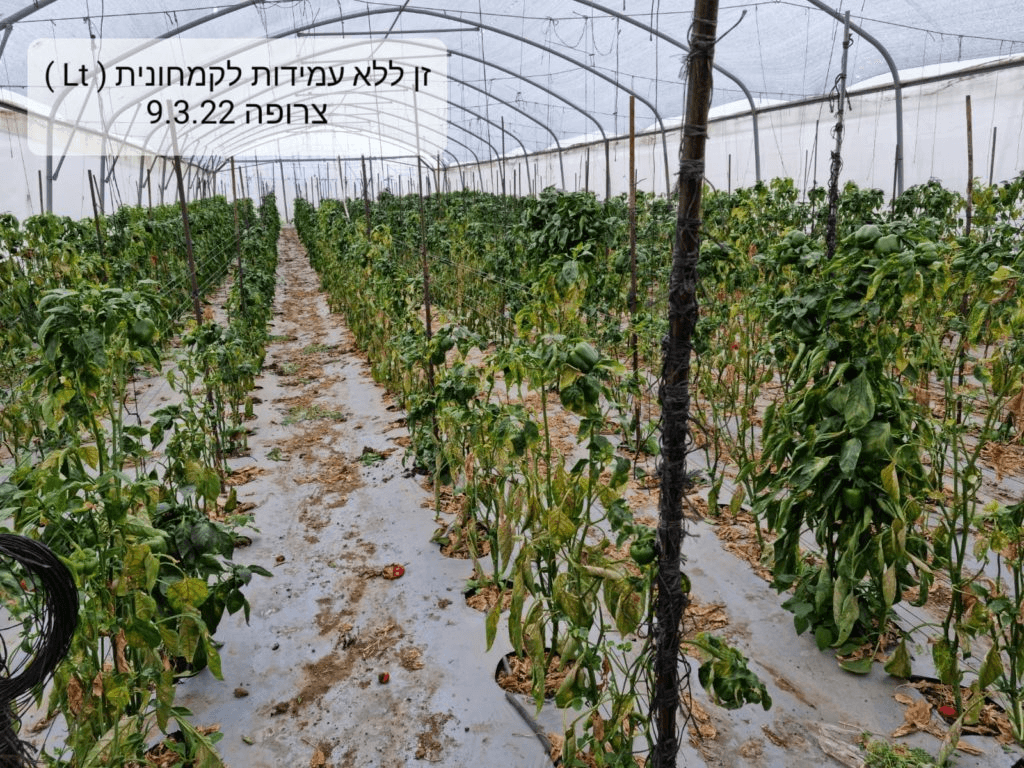
Pepper powdery mildew is caused by a fungus called Leveillula taurica, which penetrates the leaves through the stomata. The visual infection is manifested by yellow spots on the surface of the leaf and a white, woolly mycelium is visible on the underside. In severe cases, the plant's leaves fall off, and the yield potential and fruit quality are severely affected, and such a plant is often doomed to extinction.
Mature plants are more susceptible to the disease than young plants, and the disease usually manifests itself from the flowering stage of the plant onwards. It is advisable and recommended to plant pepper varieties that are resistant to powdery mildew in advance. Such varieties can be obtained from Apple Agri , which markets seeds that are resistant to viruses and diseases from the Dutch seed company Enza Zaden .
The effect of temperature on the disease
In various previous studies, it was found that temperature has a major impact on the development of the disease. Night temperatures between 10 and 15 degrees Celsius and daytime temperatures of 15 to 25 degrees Celsius are optimal for the development of the disease. The meaning of these temperatures, in the conditions of the country, is that in the summer when the night temperature is higher than 15 degrees and the daytime temperature is higher than 25 degrees, the disease does not develop well. When we reach autumn (around October), the day and night temperatures drop to a level that is very favorable for the development of the disease.
Humidity was found to have a marginal effect on the development of the disease because it develops within a relatively large humidity range.
When peppers are planted in the spring, the disease usually does not develop as strongly during the summer, or sometimes not at all. When the plant matures and the fall season arrives, the disease breaks out, sometimes very strongly!

Spraying and controlling the disease
With good pest control, the mycelium under the leaves disappears and the spot under the leaf takes on a gray-brown color.
The disease is controlled by using various preparations, and past experiments have found that liquid sulfur preparations (such as heliosulfuric acid, etc.), triazoles (Bifidane, Cystan, etc.), and strobilurins (Flint, etc.) are effective in controlling the disease. Of course, there are additional preparations from other groups.
It is important to note that you should not spray continuously with the same product, as this way the disease can easily develop resistance to the disease. It is important to spray with products from different groups and use a product from a different group with each spray. This way we will reduce the ability of the disease to develop resistance to a particular substance. Several years ago, additional products were introduced against powdery mildew, such as Hussein, Kojak and Amistar, which can be applied through the drip irrigation system. It is highly recommended to read the various spray labels before using the various products and to consult with the Ministry of Agriculture guides .
Pepper powdery mildew is caused by a fungus called Leveillula taurica, which penetrates the leaves through the stomata. The visual infection is manifested by yellow spots on the surface of the leaf and a white, woolly mycelium is visible on the underside. In severe cases, the plant's leaves fall off, and the yield potential and fruit quality are severely affected, and such a plant is often doomed to extinction.
Mature plants are more susceptible to the disease than young plants, and the disease usually manifests itself from the flowering stage of the plant onwards. It is advisable and recommended to plant pepper varieties that are resistant to powdery mildew in advance. Such varieties can be obtained from Apple Agri , which markets seeds that are resistant to viruses and diseases from the Dutch seed company Enza Zaden .
The effect of temperature on the disease
In various previous studies, it was found that temperature has a major impact on the development of the disease. Night temperatures between 10 and 15 degrees Celsius and daytime temperatures of 15 to 25 degrees Celsius are optimal for the development of the disease. The meaning of these temperatures, in the conditions of the country, is that in the summer when the night temperature is higher than 15 degrees and the daytime temperature is higher than 25 degrees, the disease does not develop well. When we reach autumn (around October), the day and night temperatures drop to a level that is very favorable for the development of the disease.
Humidity was found to have a marginal effect on the development of the disease because it develops within a relatively large humidity range.
When peppers are planted in the spring, the disease usually does not develop as strongly during the summer, or sometimes not at all. When the plant matures and the fall season arrives, the disease breaks out, sometimes very strongly!
Spraying and controlling the disease
With good pest control, the mycelium under the leaves disappears and the spot under the leaf takes on a gray-brown color.
The disease is controlled by using various preparations, and past experiments have found that liquid sulfur preparations (such as heliosulfuric acid, etc.), triazoles (Bifidane, Cystan, etc.), and strobilurins (Flint, etc.) are effective in controlling the disease. Of course, there are additional preparations from other groups.
It is important to note that you should not spray continuously with the same product, as this way the disease can easily develop resistance to the disease. It is important to spray with products from different groups and use a product from a different group with each spray. This way we will reduce the ability of the disease to develop resistance to a particular substance. Several years ago, additional products were introduced against powdery mildew, such as Hussein, Kojak and Amistar, which can be applied through the drip irrigation system. It is highly recommended to read the various spray labels before using the various products and to consult with the Ministry of Agriculture guides .